
"solar coffee machine"
800 article(s) found

Coffee Bean Solar method Yemen Moka Ethiopia Hara Brazil Indonesia Coffee Solar method
Professional coffee knowledge exchange more coffee bean information please follow the coffee workshop (Wechat official account cafe_style)

Yegashev Konga Co-op (Konga Cooperative) Top Solar Coffee beans introduction description
Konga Co-op (Konga Cooperative), founded in 2002, is located in the Yegashev producing area of Ethiopia, with more than 2000 coffee farmers and a harvest area of about 3000 hectares. Because of its proximity to the Konga (Konga) River basin, it takes Konga as the name of the cooperative. Konga is located in the famous Kaffa forest, and the whole area is a wild coffee forest. There are at least more than 1000 varieties of coffee.
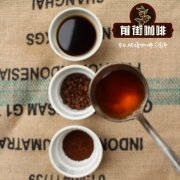
What are the common ways to handle raw coffee beans? What is the difference between solarization and washing? Coffee-producing country
Professional coffee knowledge exchange more information about coffee beans Please follow the common handling methods of raw coffee beans in the coffee workshop (Wechat official account cafe_style). What is the difference between solarization and washing? What is the grading system of raw beans in large coffee-producing countries? 1. Grading: after the seeds are taken out, the seeds are screened and graded, and Guatemala, Costa Rica and other countries are rated according to the planting height.

The treatment methods of raw beans should be analyzed.
1. Natural solarization (Natural/Dried-in-the-Fruit): the process of this method is the simplest. The fruit begins the process of sun drying without treatment after picking. This is the oldest method of treatment in existence. This method is still used in places such as Ethiopia and Brazil. Natural solarization is most common in areas where water resources are scarce. The process of drying is usually

Comparison among solarization, water washing and honey treatment what is the effect of peeling on flavor
The advent of honey processing began in the 1990s with the advent of pulped natural in South America and Brazil, a processing revolution aimed at a compromise between washing and tanning. In the end, how does honey treatment differ from traditional sun exposure or water washing? The following words are all related to honey treatment, and we can understand the differences from these words to describe honey treatment: pseudo-natur

The treatment of Coffee Fruit-- Solar
The solarization process can also be called a natural process, which is basically the oldest, simplest, and requires the least mechanical tools.

Introduction to the processing method of sun washing and semi-washing of coffee beans
Introduction of coffee treatment 1. The process of natural solarization (Natural/Dried-in-the-Fruit) is the simplest. The fruit begins the process of sun drying without treatment after picking. This is the oldest method of treatment in existence. This method is still used in places such as Ethiopia and Brazil. Natural solarization is most common in areas where water resources are scarce.

Flavor description of washed Coffee treated with Solar Coffee Honey characteristics of varieties produced by texture grinding scale
Description of the flavor of washed coffee sunny coffee honey treatment the characteristics of varieties produced by grinding scale honey treatment is called HoneyProcess or MielProcess, honey treatment is the method of peeling off the pulp and drying the fruit with endocarp. Coffee plantations in Costa Rica (CostaRica), Panama (Panama) and Guatemala (Guatemala) have adopted

Description of Flavor of Coffee Bean washing and Solar Honey treatment introduction of Grinding scale in Variety producing area
The flavor description of coffee bean washing and sun-drying honey treatment the grinding scale of the variety producing area introduces that the coffee fields in Brazil are endless and are mostly harvested by machinery in order to meet the economic benefits. When 75% of the coffee fruit in the coffee garden turns red, it starts to be harvested mechanically, followed by the same pre-operation of washing, moving into the sink to remove floating beans, sifting out sunken beans, and then using a large pulp screening machine to dig out the pulp.

Introduction to Solar treatment of Mango Manor in Blanca Chiribo Valley, Costa Rica
Professional coffee knowledge exchange more coffee bean information please follow the coffee workshop (Wechat official account cafe_style) in Costa Rica, about 1/3 people are engaged in the coffee-related industry. Costa Rica, with a population of only 3.5 million, has planted as many as 400 million coffee trees. The country's love of coffee is evident. Costa Rica's coffee industry is well organized in the world.

Introduction to the treatment methods of coffee beans: natural washing method, honey treatment method, water washing method and natural solarization method
Natural washing is very common in Brazil. The natural washing method is very similar to the water washing method, except that the natural washing method uses a high-pressure washing machine to remove the mucous membrane of the coffee surface, thus skipping the fermentation process. Several raw coffee processing companies in Brazil and Colombia have patented this method and have become local natural water system processing monopolies. this

Brazilian Green Coffee Processing Craft Coffee Green Coffee Merchant American Fine Coffee
The four most common treatments for Brazilian coffee are sun, desizing, half-washing and washing, with sun being the most popular. Since the harvest seasons of Cerrado Mineiro and Mogiana Paulista, Brazil's two main producing areas, are both dry seasons of the year, natural solarization is common in this area.

Description of Grinding scale Flavor of Solar Coffee beans in Costa Rica introduction to Water washing
Description of Grinding scale Flavor of Costa Rican Solar Coffee beans S.H.B. It is a very hard bean with an altitude of more than 1500 meters above sea level, which means high quality Costa Rican coffee. Altitude has always been a problem for coffee growers. The higher the altitude, the better the coffee beans, not only because higher altitude can increase the acidity of coffee beans and thus increase the flavor of coffee beans, but also because
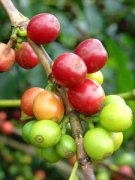
Brazilian coffee beans processing Brazilian coffee green beans wholesale coffee beans American coffee beans
The four most common treatments for Brazilian coffee are sun, desizing, half-washing and washing, with sun being the most popular. Since the harvest seasons of Cerrado Mineiro and Mogiana Paulista, Brazil's two main producing areas, are both dry seasons of the year, natural solarization is common in this area.

The difference between coffee washing, honey treatment and sun exposure jies
Introduction to the difference between coffee washing, honey treatment and sun exposure. The process of natural solarization (Natural/Dried-in-the-Fruit) is the simplest. The fruit begins the process of sun drying without treatment after picking. This is the oldest method of treatment in existence. This method is still used in places such as Ethiopia and Brazil. Natural solarization in the absence of water resources

Step by step of Coffee Solar method Coffee Bronze does not know what Solar method is
Professional coffee knowledge exchange more coffee bean information please follow the coffee workshop (Wechat official account cafe_style) front street-coffee sun treatment steps introduction (Natural, Natural Dry, Sun Dry, Dry Process) 1, drying the coffee fruit directly on the drying ground, sometimes with the help of a dryer. When the water content reaches 12%, the

The harvest and processing process of coffee beans and two basic processing methods
Picking: due to climatic differences, the harvest season is usually from September to March in the Northern Hemisphere and from April to August in the Southern Hemisphere. When the coffee beans are ripe, they can be picked. In many alpine slopes, coffee must be picked manually. In relatively flat producing areas such as Brazil, Australia and Hawaii, they can be picked by machines. These two methods

The difference between semi-washing and honey treatment of coffee beans washed in the sun
Difference between semi-washing and honey treatment one step of sun-washing coffee beans: retain 100% pectin, and then reduce the water content of raw beans to 10%, 12% by either sun drying or machine drying or a combination of both. Another step: according to different needs, adjust the setting of the pectin removal machine to make the parchment shell retain different proportions of pectin, and then dry or combine the two by solarization or machine.
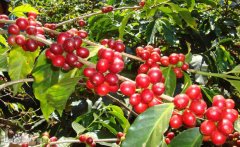
Brazilian coffee green beans processing technology American coffee beans honey processing commercial Brazilian beans green beans
The four most common treatments for Brazilian coffee are sun, desizing, half-washing and washing, with sun being the most popular. Since the harvest seasons of Cerrado Mineiro and Mogiana Paulista, Brazil's two main producing areas, are both dry seasons of the year, natural solarization is common in this area.

What is Coffee Solar Coffee treatment method Coffee Bean Coffee treatment
Tanning is a traditional method for the initial processing of coffee beans, and at present, almost all coffee-growing countries such as Ethiopia and Yemen still use solarization to treat raw beans. Sun treatment will first identify sunken beans in the sink, that is, ripe or half-ripe beans are spread in the drying farm for natural drying. The specific time depends on the local climatic conditions, which usually takes two to four weeks.